
Learning from the past to plan for the future
My magnum opus that I’ve been working for the last 5 years has now been published. This uses my own experiences and analytical tools to review the historical evolution of waste and resource management since the first environmental legislation back in the 1970s when I first started working as a consultant in the sector. I then draw on my more recent international policy work to reflect on priorities and challenges over the next decade. My basic thesis is that we need to understand how the sector has evolved in the recent past to plan confidently for the future. I hope it will be widely read, not least to avoid ‘reinventing the wheel’; which is why I have published open access, as part of the 40th anniversary celebrations of ISWA’s peer-reviewed journal Waste Management & Research, rather than as a shiny book sitting behind a paywall.
The significant potential of better waste and resource management for climate mitigation
ISWA are hosting the first ever Waste and Resources Pavilion at COP28 in Dubai. My contribution is an article, co-authored with the ISWA President Carlos Silva Filho and Technical Director Aditi Ramola, where we challenge the common perception that waste and resource...
Learning from the past to plan for the future
My magnum opus that I’ve been working for the last 5 years has now been published. This uses my own experiences and analytical tools to review the historical evolution of waste and resource management since the first environmental legislation back in the 1970s when I first started working as a consultant in the sector. I then draw on my more recent international policy work to reflect on priorities and challenges over the next decade. My basic thesis is that we need to understand how the sector has evolved in the recent past to plan confidently for the future. I hope it will be widely read, not least to avoid ‘reinventing the wheel’; which is why I have published open access, as part of the 40th anniversary celebrations of ISWA’s peer-reviewed journal Waste Management & Research, rather than as a shiny book sitting behind a paywall.
Waste management needs to be central to the plastics treaty
ISWA has published my blog that makes the evidence-based case for bringing waste management onto the main agenda of the Intergovernmental Negotiating Committee (INC) for the proposed international treaty to end plastics pollution; the third INC meeting is in Nairobi 13-17 November 2023. Much of the focus of negotiations is rightly on plastics reduction and circularity. But a necessary parallel component is sound waste management and plastics leakage prevention. It is not a case of one or the other – both are necessary and complementary.
Learning from the past to plan for the future
My magnum opus that I’ve been working for the last 5 years has now been published. This uses my own experiences and analytical tools to review the historical evolution of waste and resource management since the first environmental legislation back in the 1970s when I first started working as a consultant in the sector. I then draw on my more recent international policy work to reflect on priorities and challenges over the next decade. My basic thesis is that we need to understand how the sector has evolved in the recent past to plan confidently for the future. I hope it will be widely read, not least to avoid ‘reinventing the wheel’; which is why I have published open access, as part of the 40th anniversary celebrations of ISWA’s peer-reviewed journal Waste Management & Research, rather than as a shiny book sitting behind a paywall.
Learning from the past to plan for the future
My magnum opus that I’ve been working for the last 5 years has now been published. This uses my own experiences and analytical tools to review the historical evolution of waste and resource management since the first environmental legislation back in the 1970s when I first started working as a consultant in the sector. I then draw on my more recent international policy work to reflect on priorities and challenges over the next decade. My basic thesis is that we need to understand how the sector has evolved in the recent past to plan confidently for the future. I hope it will be widely read, not least to avoid ‘reinventing the wheel’; which is why I have published open access, as part of the 40th anniversary celebrations of ISWA’s peer-reviewed journal Waste Management & Research, rather than as a shiny book sitting behind a paywall.
Socio-economic development drives solid waste management performance in cities
Our new open access paper tests and confirms for the first time the long-standing hypothesis that both the rate of municipal solid waste (MSW) generation in a city, and the performance of its MSW management system, depends on its level of socio-economic development...
DCW wins the 2022 ISWA Publication Award
It is indeed nice to have your work recognised! My co-authors Andy Whiteman and Mike Webster will receive the 2022 ISWA Publication Award this week at the ISWA World Congress Gala Dinner in Singapore, for our conceptual framework and global theory of waste and development, The Nine Development Bands. The 9DBs was published open access last year and is a powerful addition to the practitioner’s toolkit, bringing depth and nuance to understanding waste and resource management systems globally and helping you to focus your time and resources on achieving maximum impact. I am proud of all five of my ISWA Publication Awards over the last 20 years!
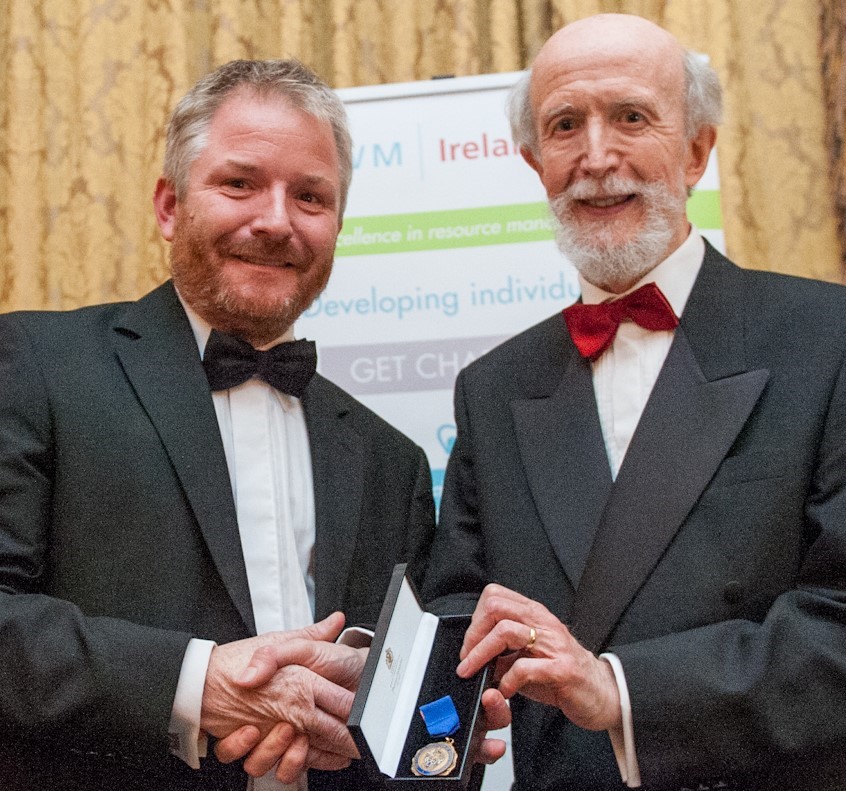
DCW awards his Presidential Medal
DCW awarded his CIWM Presidential Medal for 2018 to Mike Webster, the founder and CEO of the new charity Wasteaid, which is working directly with local communities to tackle the global waste crisis.
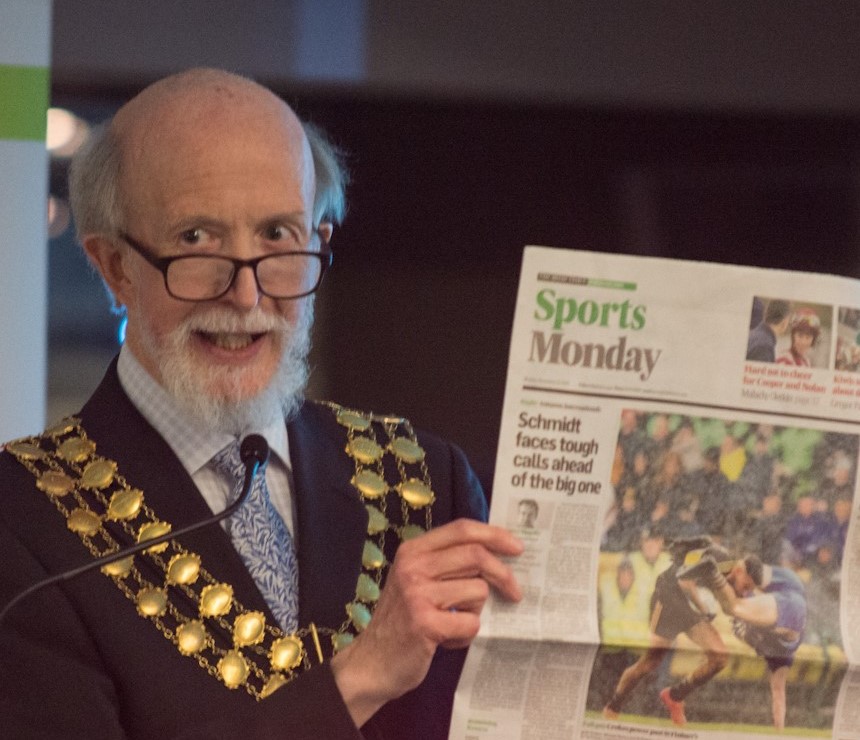
DCW hands over CIWM Presidency
DCW handed over to Enda Kiernan at the Aviva Stadium in Dublin on 13th November 2018. The Gaelic Football team which Enda manages appeared in the lead photo story of the previous day’s Irish Times
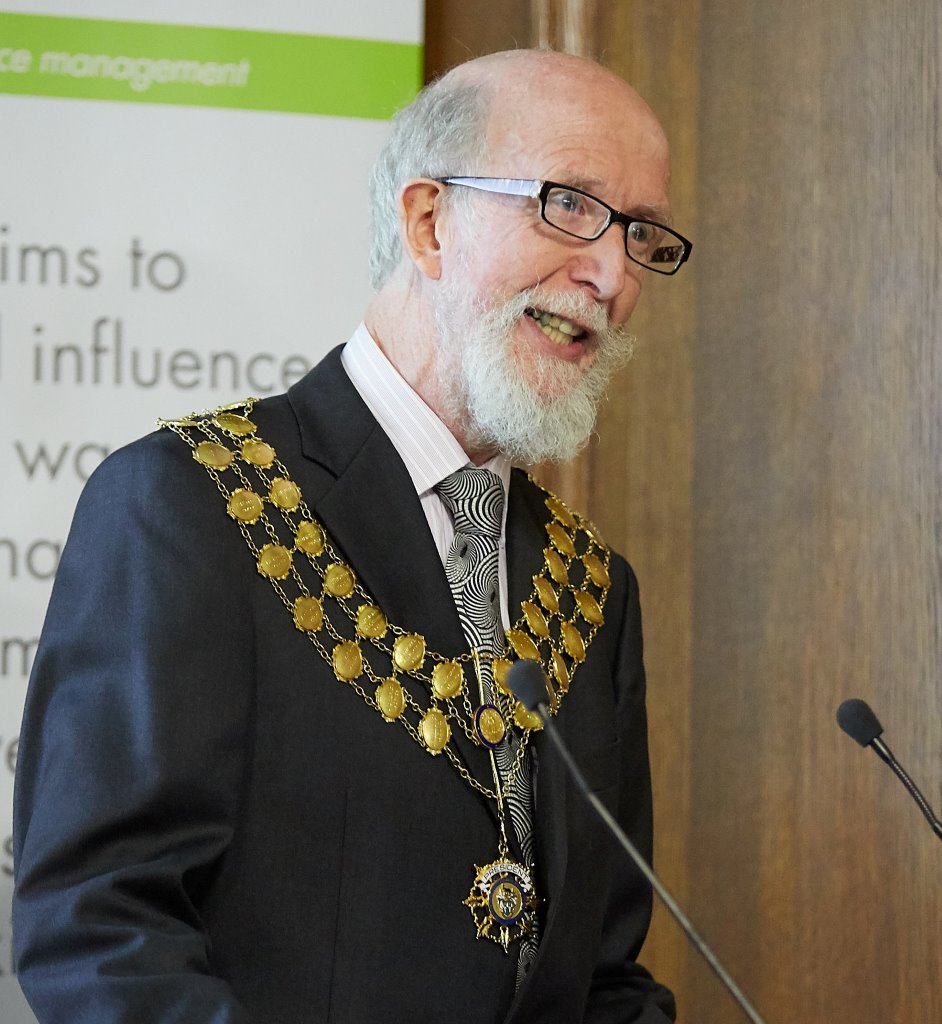
DCW inaugurated as CIWM President
Professor David C Wilson giving his inauguration speech as CIWM President 2017 at Church House Westminster in October 2017. His theme for the year was solid waste management as the forgotten utility service, underpinning modern society.

DCW’s CIWM Presidential Report 2017
DCW commissioned WasteAid UK to prepare a practical toolkit for poor communities on how to make useful products from the low-value plastics and organics in their waste. In its first year, the website was visited 56,000 times, with 7,000 downloads of the toolkit.
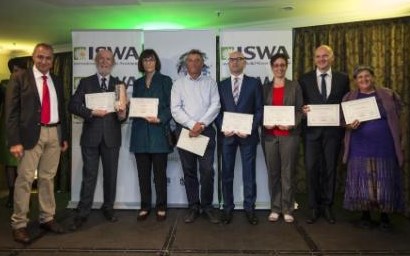
ISWA Publication Award 2015
DCW with co-authors Ljiljana Rodic, Andy Whiteman, Costas Velis, Barbara Oelz, Joachim Stretz and Anne Scheinberg, receiving the Award from ISWA Scientific and Technical Committee Chair Antonis Mavropoulos (left), at the ISWA 2015 World Congress in Antwerp on Tuesday 08 September.