
Practical Action focuses attention on solid waste management
DCW was sent a copy of Practical Action’s new report ‘Managing Our Wastes 2021’ a few weeks ago and invited to write an endorsement for it. Having read and reviewed it, I was happy to do so; the report was launched today in a webinar hosted by UN-Habitat. I am quoted on the back cover: ‘Most development work tackles the issue of solid waste management from the ‘top down’, and often focuses on (large scale) infrastructure. Practical Action strengthens the ‘bottom-up’, people-centred aspects. I commend to you this important new manifesto to put people back at the centre of how we manage our solid wastes.’
Let’s Skip ‘The Tip’
Language matters. DCW’s March column for the CIWM Journal celebrates the dramatic improvements in waste and resource management that have been achieved since he first entered the sector in 1974. This is largely due to changes in public behaviour, which have enabled the UK, for example, to increase recycling rates over the last 20 years from just 6% to 46%. However, he questions how we can expect people’s mind set to change permanently when some local authorities, and both professionals and politicians, continue to refer to modern recycling facilities as ‘the rubbish tip’.
Turning the Tide
DCW’s February column for the CIWM Journal focused on the topical subject of marine plastics. He reported back on ‘Oceans 21’, the latest Development Finance Forum organised by the German Development Bank KfW, where he led a workshop on marine litter. The conclusions were clear: the amount of plastics entering the oceans is at least an order of magnitude greater than estimates of the visible quantities in the oceans or on beaches – so the first priority is to ‘turn off the tap’. And the most effective way to do that is to extend municipal solid waste collection in developing countries to all people and to eliminate uncontrolled dumping and burning; our best judgement was that this could reduce the weight of plastics entering the oceans by 50-70%.
Inspiring Reuse
DCW’s January column for the CIWM Journal showcases the five shortlisted entries for the Best Reuse Project at the CIWM Sustainability and Resource Awards 2017. As the judge for this category, DCW was inspired by the quality and sheer variety of the five very different reuse projects. He hopes that the projects will inspire others too, as we try to ensure that reuse, sitting near the top of the waste hierarchy, receives the same priority as has been given to recycling.
A key utility service
In his first monthly column in the CIWM Journal as CIWM President, Professor David C. Wilson has revisited his Presidential address. His overall theme for his year is solid waste management as a key utility service, underpinning modern society. Within that three strands are to avoid complacency when it comes to protecting public health and the environment; the continuing move from the linear ‘make – use – dispose’ model to a more circular economy; and the global waste crisis, with more than 3 billion people lacking access to a basic solid waste management service.
DCW inaugurated as CIWM President
Professor David C. Wilson has been inaugurated as the 102nd President of CIWM, the UK and Irish professional body for resources and waste. He described solid waste management as one of the key utilities and said that as public sector budgets continue to come under pressure, “we must not lose sight of where we have come from, that the service exists first and foremost to protect public health”. He highlighted the ‘global waste management emergency’, where 40% of the World’s population lacks this basic utility service. He also launched his Presidential report, Making Waste Work: A Toolkit, prepared by WasteAid UK and aimed at helping unserved communities in the least developed countries to help themselves, by developing self-sustaining businesses making useful products for the local market from the resource value in their waste.
DCW launches toolkit for community waste management
At his inauguration on 17th October 2017, Professor David C. Wilson launched his CIWM Presidential Report: Making Waste Work: A Toolkit – Community Waste Management in Low and Middle Income Countries. The aim is to help poor communities in the least developed countries, part of the 40% of the World’s population who lack access to any solid waste management services, to help themselves by developing self-sustaining businesses making useful products for the local market from the resource value in their waste. WasteAid UK have prepared this practical guidance on low cost recycling technologies, involving minimal capital investment, to help people become self-employed recycling entrepreneurs, providing a very valuable service for the health and well-being of their community, and the whole planet – as well as reducing poverty and creating sustainable livelihoods.

DCW wins 2024 ISWA Publication Award
DCW won the 2024 ISWA Publication Award for his magnum opus, looking back over his long career at the evolution of waste and resource management since the first environmental control legislation in the 1970s, and reflecting on current and future priorities.
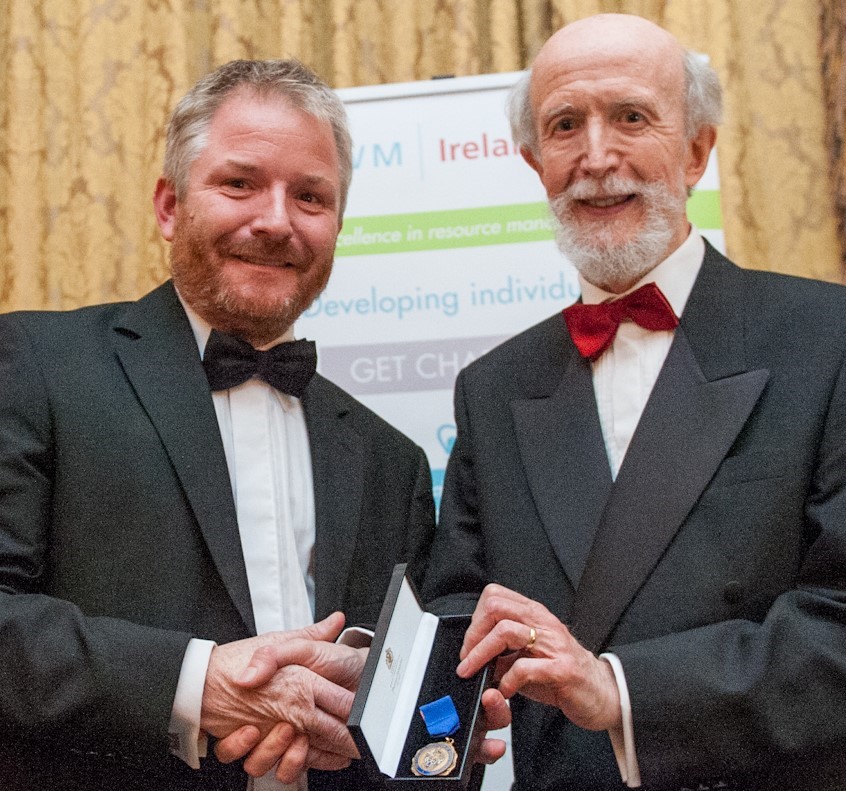
DCW awards his Presidential Medal
DCW awarded his CIWM Presidential Medal for 2018 to Mike Webster, the founder and CEO of the new charity Wasteaid, which is working directly with local communities to tackle the global waste crisis.
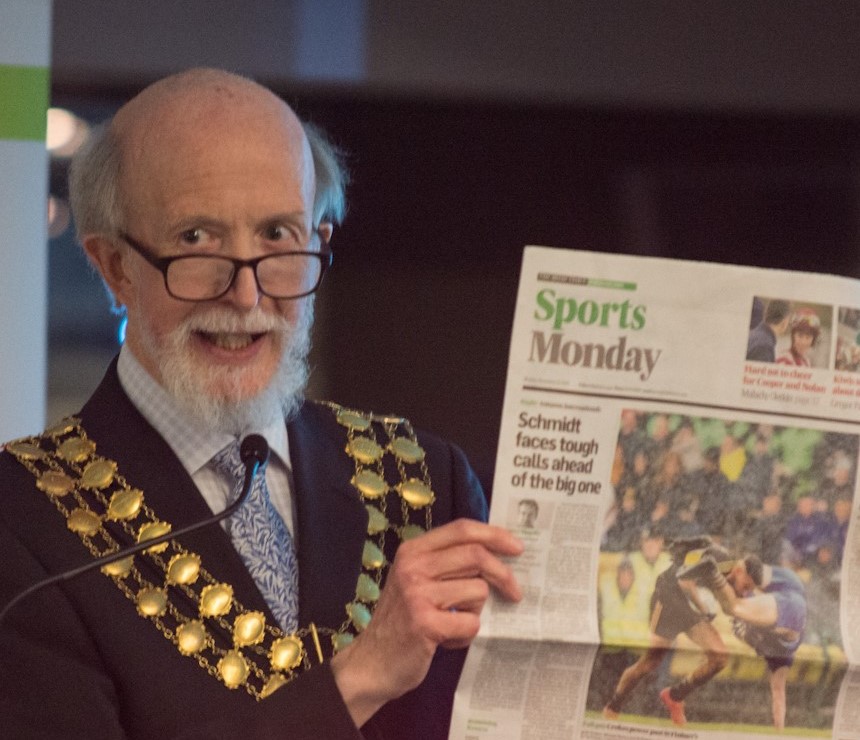
DCW hands over CIWM Presidency
DCW handed over to Enda Kiernan at the Aviva Stadium in Dublin on 13th November 2018. The Gaelic Football team which Enda manages appeared in the lead photo story of the previous day’s Irish Times.
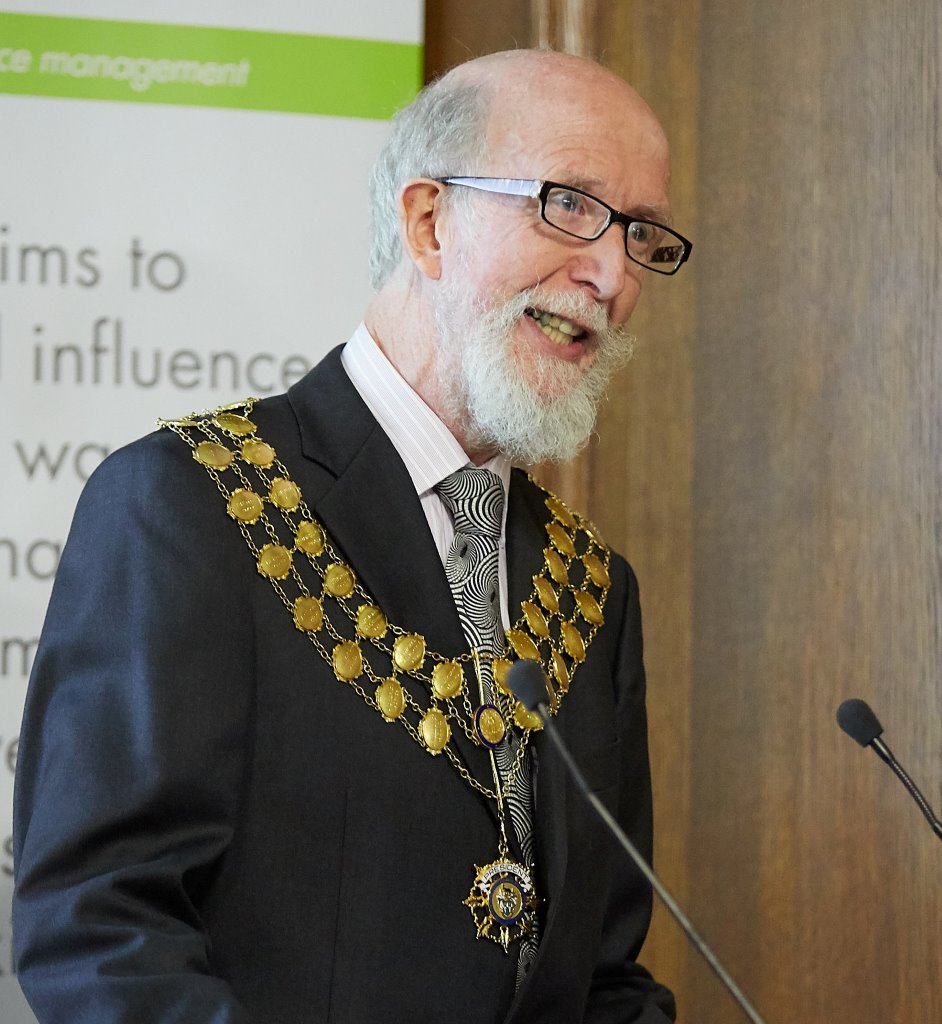
DCW inaugurated as CIWM President
Professor David C Wilson giving his inauguration speech as CIWM President 2017 at Church House Westminster in October 2017. His theme for the year was solid waste management as the forgotten utility service, underpinning modern society.

DCW’s CIWM Presidential Report 2017
DCW commissioned WasteAid UK to prepare a practical toolkit for poor communities on how to make useful products from the low-value plastics and organics in their waste. In its first year, the website was visited 56,000 times, with 7,000 downloads of the toolkit.
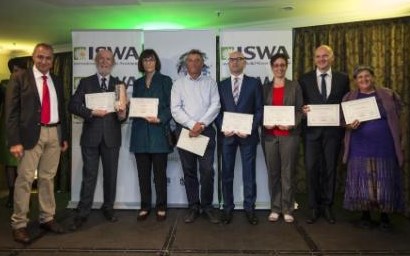
ISWA Publication Award 2015
DCW with co-authors Ljiljana Rodic, Andy Whiteman, Costas Velis, Barbara Oelz, Joachim Stretz and Anne Scheinberg, receiving the Award from ISWA Scientific and Technical Committee Chair Antonis Mavropoulos (left), at the ISWA 2015 World Congress in Antwerp on Tuesday 08 September.