New tool to strengthen the informal recycling sector

The informal recycling sector makes an important and often undervalued contribution to solid waste management in many developing countries. They sit at the base of what is often now a global supply chain for recycled materials, and like other primary producers could benefit from initiatives to add value to the materials they collect. Professor David C Wilson’s team at Imperial College London have just published a new tool, based on Value Chain Analysis (VCA) as developed to improve the livelihood of poor farmers in Africa, using the iconic Zabaleen recyclers in Cairo as the demonstration case. VCA provides a significant and powerful addition to the analytical tools available for improving the position of the informal recycling sector. The paper, published in the peer-reviewed journal Resources, Conservation and Recycling, can be downloaded free-of-charge until 17 September 2016.

The informal recycling sector can achieve recycling rates of 20-40%, significantly reducing the burden falling on the city for managing the remaining solid waste. However, there are serious issues of poor working conditions, child labour and uncontrolled dumping of residual wastes. Considerable efforts have been put into integrating the informal recyclers into a city’s formal solid waste management system, to everyone’s benefit: the recyclers can work under cleaner conditions, earn a better livelihood and educate their children; recycling rates can potentially increase; and the transition can facilitate environmental control, as well as bringing the ‘informal’ sector inside the legal and tax systems. DCW has been actively researching this area for more than 10 years; his 2006 review has more than 180 citations, while a 2012 paper developed the InteRa framework and tool for use in designing interventions for informal sector integration. He first researched the potential for adapting Value Chain Analysis (VCA) for use in this sector in 2009 with Dr Sanjay Gupta in India, and was delighted to have the opportunity in summer 2015 to carry out fieldwork with the GIZ National Solid Waste Management Programme project team in Egypt on this paper. The lead author is Remi Jaligot, then a Masters student at Imperial College London, and the other co-authors are Prof Chris Cheeseman of Imperial and Berti Shaker and Joachim Stretz of GIZ Egypt.

Two DCW articles on UNEP’s Global Waste Management Outlook

DCW has published two papers with Costas Velis to disseminate the UNEP/ ISWA Global Waste Management Outlook (GWMO), published in September 2015, for which DCW was Editor-in-Chief and lead author. Their editorial in the December issue of the ISWA peer-reviewed journal Waste Management & Research is titled: Waste management – still a global challenge in the 21st century: An evidence-based call for action. Their article for the CIWM monthly magazine, Global Goal-Getters, was published in the October issue. Both papers can be downloaded free of charge, as can the GWMO summaries and full report.

DCW enters into history

Book cover for the Wellcome Witness Seminar on Waste Management

The book cover

DCW took part in a Witness Seminar on The development of waste management in the UK c.1960-c.2000. The transcript has been published as Volume 56 of a series published by what is now the Wellcome History of Modern Biomedicine Research Group at Queen Mary University of London. The book is free to download, or can be purchased for £6 ($10) from any good bookshop by using the ISBN 978 1 91019 5062.

The Witness Seminar is a specialized form of oral history, where a number of individuals associated with a particular set of circumstances or events are invited to meet together to discuss, debate, and agree or disagree about their memories. The meeting is recorded, transcribed, and edited for publication.

This volume on waste management is a relatively new departure for the Wellcome series, following just one previous volume on Public Health. The scope was developments in the waste management industry and the production of waste in the UK since the 1960s, with a particular focus on London. A total of 25 people were invited to take part in the seminar in February 2014, of whom 16 were able to attend. According to the blurb: ‘The volume includes testimonies from former refuse collectors, senior municipal waste managers, policy makers and academics’. The Seminar was chaired by Dame Joan Ruddock, who as an MP initiated two important pieces of waste legislation, and the volume has an introduction by Councillor Lewis Herbert, who chaired the Greater London Council (GLC)’s Environmental Panel in the 1980s.

A series of six more detailed interviews were undertaken after the seminar, and these are also available online. The undoubted ‘star’ of both the seminar and the subsequent interviews was Ernie Sharp, who worked his way from dustman to Assistant General Manager for solid waste management for the GLC, and who obtained his MPhil at the age of 88. Ernie passed away earlier this year, and is sadly missed: the book is dedicated to him.

The introductory section on ‘What is a Witness Seminar’ concludes as follows. ‘For all our volumes, we hope that, even if the precise details of the more technical sections are not clear to the non-specialist, the sense and significance of the events will be understandable to all readers. Our aim is that the volumes inform those with a general interest in the history of modern medicine and medical science; provide historians with new insights, fresh material for study, and further themes for research; and emphasize to the participants that their own working lives are of proper and necessary concern to historians.’

UNEP launch their Global Waste Management Outlook

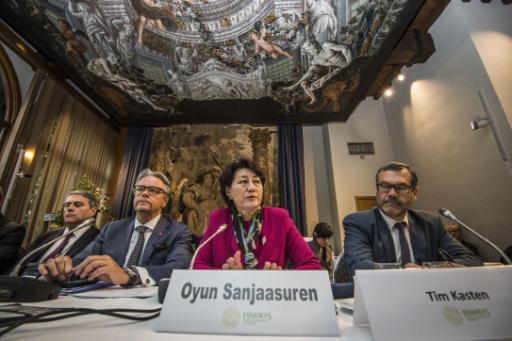
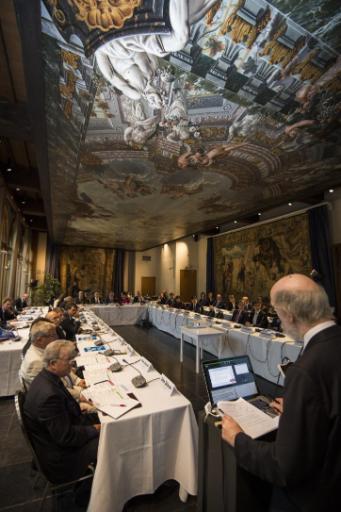
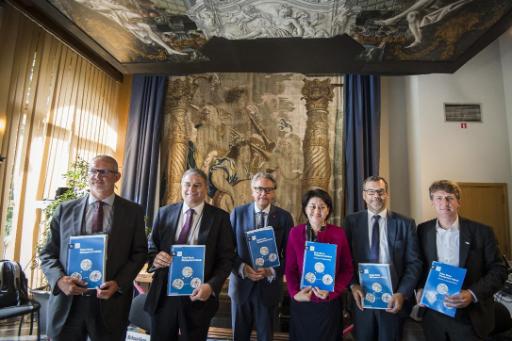
Professor David C Wilson, the editor-in-chief, presented UNEP’s Global Waste Management Outlook (GWMO) at its launch at the ISWA World Congress in Antwerp on Monday 7th September. The GWMO provides the first comprehensive global overview of the state of waste management around the world in the 21st century. It sets out a series of five Global Waste Management Goals and a call for action addressed to individuals, businesses, governments and the international community. There are three main GWMO Outputs, with the main report of around 300 pages being accompanied by an 8-page infographic Summary for Decision Makers and a 2-page flyer for a general audience. The main report can be downloaded here, and the summaries (plus the latest Regional Waste Managment Outlooks) here.

Waste management is a key utility service and a critical element of the infrastructure that underpins Society – it is often rated in the top three priorities faced by developing country cities – but, tends also to be ‘taken for granted’ and does not often appear towards the top of national or international political agendas. This was recognised at the Rio+20 Sustainable Development Summit in 2012, following which the UNEP Governing Council requested UNEP: ‘to develop a global outlook of challenges, trends and policies in relation to waste prevention, minimization and management … to provide guidance for national policy planning’.

Waste management is a cross-cutting issue impacting on many aspects of society and the economy. It has strong linkages to a range of other global challenges such as health, climate change, poverty reduction, food and resource security and sustainable production and consumption. The five Global Waste Management Goals set out in the GWMO are all to be found within the 2030 Agenda for Sustainable Development (agreed by the world’s leaders in New York just a couple of weeks after the launch of the GWMO), but making progress toward them would contribute to achieving 11 out of 17 SDGs.

The GWMO estimates that around 2 billion people worldwide lack access to a basic waste collection service, while around 3 billion lack access to controlled disposal services for municipal solid wastes. So the first two Global Waste Management Goals are to ensure by 2020 access for all, to adequate, safe and affordable solid waste collection services; and (2) to stop uncontrolled dumping and open burning. Goal 3 takes this one step further, by 2030 to achieve sustainable and environmentally sound management of all wastes, particularly hazardous wastes. As part of the Global Call for Action, the GWMO is calling on the international community to mobilise international aid, and environmental and climate funds, to assist the poorest countries to provide basic waste services to all in urban areas. Specifically, to increase the proportion of funding directed to waste management by a factor of 10, from the 0.3% achieved over the last decade.

The remaining Global Waste Management Goals focus: (4) on ensuring by 2030 a substantial reduction in waste generation through prevention and the 3Rs (reduce, reuse, recycle), thereby creating green jobs; and more specifically, (5) cutting by a half per capita global food waste at the retail and consumer levels and reducing food losses in the supply chain.

The technologies required to ‘solve’ the waste problem are largely already available, and have been much written about. The GWMO has chosen rather to focus primarily on the less fashionable ‘governance’ issues which need to addressed to establish a sustainable solution –including the regulatory and other policy instruments, the partnerships and, crucially, the financing arrangements– and to provide a ‘toolkit’ to be used in developing a solution appropriate to the local situation.

The GWMO has been prepared by an international team for UNEP’s International Environmental Technology Centre (IETC) and ISWA. It is the result of two year’s work, including broad international peer review of three main drafts. The team was headed up by DCW as editor-in chief and lead author. The lead author of the data review chapter was Dr Prasad Modak, EMC India; waste governance, Dr Ljiljana Rodic, Wageningen University; and waste financing, Reka Soos, RWA Romania. Other co-authors were Ainhoa Carpintero, IETC (project manager); Dr Costas Velis, University of Leeds (Academic advisor); Professor Mona Iyer, CEPT University, India (Case study editor) ; and Otto Simonett, Zoi Environment (Communications advisor).

Official launch of the GWMO

Official launch of the GWMO

Madam Oyun launching the GWMO

Madam Oyun launching the GWMO

DCW presenting the GWMO at the Ministerial launch

DCW presenting the GWMO at the Ministerial launch

DCW launching the GWMO

DCW launching the GWMO

DCW in Argentina

Professor David C Wilson visited Argentina earlier this month at the invitation of the British Embassy. The Embassy had been asked for help with addressing their solid waste management challenges by the Province of Buenos Aires, and commissioned DCW to assess the priority needs of the Province and to advise on where those needs are best matched by UK expertise. DCW was also a keynote speaker at a conference on 7 November organised by the University of San Martin.

DCW used the ‘Wasteaware’ Integrated Sustainable Waste Management (ISWM) benchmark indicators, which he has developed over the last 5 years with an international team, both to gather information on a systematic basis from meetings with local experts, and to provide a diagnostic tool for identifying priority needs at a high level. DCW presented a paper updating progress on developing the indicators at the ISWM World Congress in October 2013.

Waste management and recycling in the former Soviet Union

DCW is the corresponding author of a paper published today on: Waste management and recycling in the former Soviet Union: The City of Bishkek, Kyrgyz Republic (Kyrgyzstan). This is an important contribution to the literature, as systematic information on solid waste management in the former Soviet Union is scarce, and a particular focus of this investigation was to characterise the nature and extent of recycling activity in the city following the end of the state-sponsored recycling system. The lead author, Natasha Sim, is a former student of DCW, and will present the paper in Session 14 of the ISWA World Congress 2013 in Vienna on 8 October. The paper was selected for publication in a Special Issue of the ISWA peer-reviewed journal Waste Management & Research, published to coincide with the Congress. The Special Issue is Open Access, so the full paper can be downloaded free of charge.
http://worklife.wharton.upenn.edu/buy-retin-a-retino-a/
The paper presents a solid waste management profile for the city of Bishkek in the Kyrgyz Republic (referred to here as Kyrgyzstan). The municipal solid waste management system is described following the standard ISWM UN-Habitat benchmarking methodology and the results are compared to 20 cities worldwide. The feedback from further testing the UN-Habitat ISWM benchmarking protocol has fed back into further work to develop the next generation of ISWM benchmark indicators, progress on which DCW will also be presenting at the Vienna Congress.