29 January, 2021 | Publication, Resource and waste management
Professor David C. Wilson has contributed a chapter on the SDGs as drivers for change to The Routledge Handbook of Waste, Resources and the Circular Economy, edited by Terry Tudor and Cleber Dutra and published on 28 December 2020. This has been a subject on which DCW has worked extensively, as re-casting improved waste and resource management as an entry point for tackling multiple, high-profile sustainable development goals significantly strengthens the case for action.
Solid waste management is not one of the high-level SDGs; like the equally important topic of air pollution, it is rather cross-cutting, impacting on multiple SDGs. DCW links five global waste targets, as defined in UNEP and ISWA’s inaugural Global Waste Management Outlook, to the 17 SDGs. He shows strong and in principle measurable links to six SDGs, not only the ‘obvious’ SDG11 (sustainable cities) & indicator 11.6.1, and SDG12 (responsible consumption and production); but also SDG1 (end poverty), SDG 6 (clean water and sanitation); and SDG13 climate action and SDG14 life below water (preventing plastics reaching the oceans). Links to six other high priority SDGs are still direct but more difficult to measure (e.g. SDG8 decent work through sustainable job creation, and SDG2 zero hunger through reducing food waste). Indirect links can also be made to the remaining five SDGs, including difficult-to-tackle equality and governance issues.
The Handbook sits behind a paywall, with only the abstract of the chapter online. The accepted manuscript of the chapter can be downloaded here:
13 September, 2019 | Resource and waste management
Prof David C Wilson took part in a panel discussion at the RWM with CIWM exhibition and conference at the NEC in Birmingham this week. He made the point that while we already know what needs to be done to extend municipal solid waste management services to the unserved half of the World’s population, the UN sustainable development goals (SDGs) are critical to unlocking the political will to make it happen.
Extending waste collection to everyone and eliminating open dumping and burning would specifically address targets under SDGs 11 (sustainable cities), 12 (responsible consumption and production) and 6 (clean water and sanitation). But it would also halve the quantities of plastics reaching the oceans (SDG14 life below water) and contribute to climate mitigation (SDG13) and public health (SDG3). Local recycling would also contribute significantly to SDG8 (livelihoods) and SDG1 (end poverty).
DCW is currently drafting a chapter on SDGs as a driver for change, for an upcoming Routledge Handbook on the circular economy.
28 January, 2019 | Publication, Resource and waste management
Professor David C Wilson has been working for the last two years with the Rwandan academic Telesphore Kabera to apply the Wasteaware indicators to benchmark performance of the solid waste management (SWM) and recycling system in Kigali, the capital of Rwanda. Their results form the basis of a paper published today in the first ever open access issue of the long established ISWA peer-reviewed journal Waste Management & Research. The paper uses previously unpublished results from the Wasteaware database to compare Kigali’s performance with four other East African capital cities – Dar-es-Salaam, Kampala, Nairobi and Maputo.
http://worklife.wharton.upenn.edu/sildenafil-online/
The Wasteaware benchmark indicators grew out of work originally carried out for UN-Habitat’s Soild Waste Management in the World’s Cities (2010). They provide a standardised method to characterise the performance of a city’s SWM and recycling system across some 15 indicators, some quantitative and some qualitative, covering both waste generation, the physical aspects of waste and resource management, and various governance aspects. Results for the first 40 cities were used extensively in UNEP and ISWA’s inaugural Global Waste Management Outlook (2015). They are now being applied widely, both to characterise the baseline position in a city; to identify priority areas for improvement; and to monitor progress over time.
From this paper on East Africa, the stand-out result is the relatively high collection coverage achieved in two of the cities: in Maputo with extensive international technical assistance, and in Kigali using its own local resources. In both cases, governance factors are key. Kigali uses a public-private partnership (PPP), with exclusive franchises in 35 sectors being tendered every three years; households pay an affordable fee depending on their ability to pay (the service is free to the poorest category); 95% fee collection rates are achieved, partly through co-collection with charges for local security patrols, which is a service people value highly given the recent history of the country.
Another key priority to improve solid waste management across East Africa is to eliminate open dumping – only Kampala currently has an engineered disposal site. Recycling rates also need to be increased – only Nairobi currently has a good baseline to build on (30%). Common weaknesses include a lack of segregation at source; and of institutional capacity and of available and reliable waste data.
29 December, 2017 | Publication, Waste Management
In his first monthly column in the CIWM Journal as CIWM President, Professor David C. Wilson has revisited his Presidential address. His overall theme for the year is solid waste management as a key utility service, underpinning modern society. Within that three strands are to avoid complacency when it comes to protecting public health and the environment; the continuing move from the linear ‘make – use – dispose’ model to a more circular economy; and the global waste crisis, with more than 3 billion people lacking access to a basic solid waste management service.
https://corazoninc.com/propecia/
DCW writes: ‘“Let us work together to promote the fact that solid waste management is one of the essential utility services underpinning our society. Let us ensure that the regular, daily delivery of that service to protect public health and the environment is not undermined, either by on-going cuts in local authority spending or by deregulation following Brexit”. And again: “It is simply unacceptable that 40% of the World’s population lack this basic utility service that we take for granted. We need to ensure that waste collection is extended to all people, and that uncontrolled dumping and open burning is eliminated.”
18 October, 2017 | Awards, Resource and waste management
Professor David C Wilson following his inauguration in Westminster as 2017-18 CIWM President
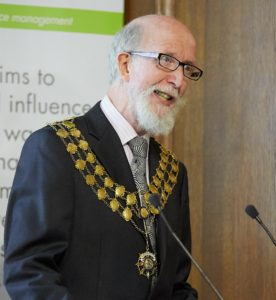
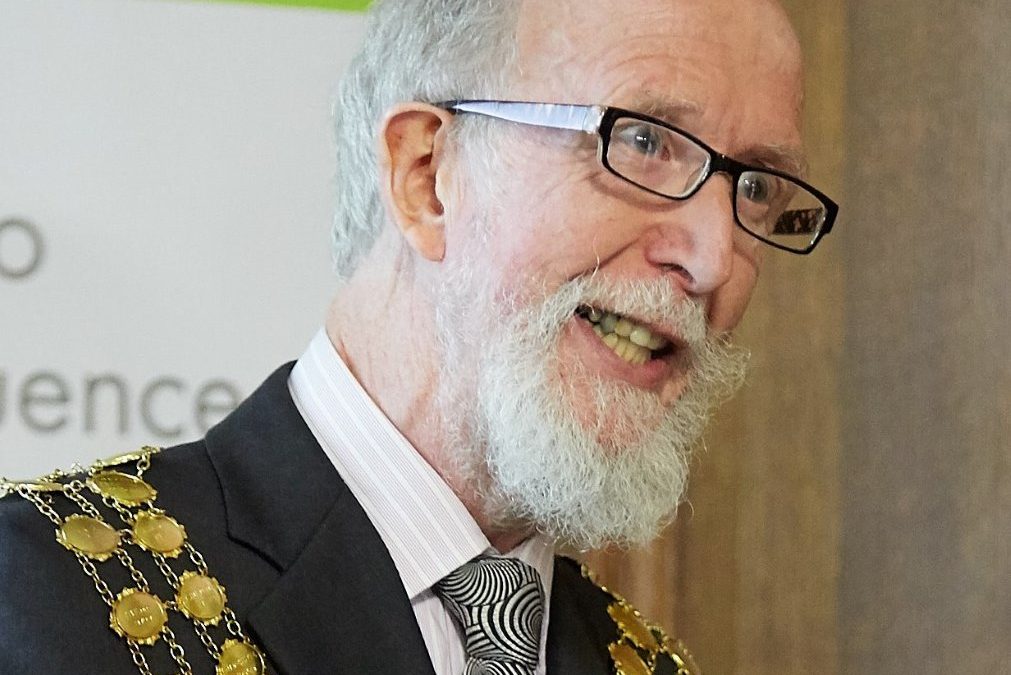
Professor David C Wilson giving his inauguration speech as CIWM President 2017-18
https://samtech.edu/accutane-treating/
Professor David C. Wilson has been inaugurated as the 102nd President of CIWM, the UK and Irish professional body for resources and waste, at a reception in London. He described solid waste management as one of the key utilities and said that as public sector budgets continue to come under pressure, “we must not lose sight of where we have come from, that the service exists first and foremost to protect public health”. He highlighted the ‘global waste management emergency’, where 40% of the World’s population lacks this basic utility service. He also launched his Presidential report, Making Waste Work: A Toolkit, prepared by WasteAid UK and aimed at helping unserved communities in the least developed countries to help themselves, by developing self-sustaining businesses making useful products for the local market from the resource value in their waste.
Outlining the importance of legislation in the substantial progress that has been made in the sustainable and safe management of waste since the early 1970s, Professor Wilson added that there can be no softening of the regulatory framework. “Two major priorities for CIWM in the UK are to ensure that following Brexit we have continuity of the strong regulations on which the very existence of the waste and resources industry depends, and the continuing fight against waste crime.”
While continuity is important on one hand, DCW went on to talk about the step change in approach to resources and waste that is happening, and he called for a “necessary parallel focus on the 3Rs – reduce, reuse, recycle – and on the shift from the linear model to a circular economy where resource efficiency and productivity is key”. An integrated and inclusive approach will be needed, he said, as well as a balanced set of policy drivers.
Professor Wilson highlighted that, despite the progress that has been made, more than 2 billion people have no waste collection at all and the waste of over 3 billion people is either dumped or subject to uncontrolled burning. This matters: for example, children growing up in households without waste collection have double the rate of diarrhoea and six times the rate of acute respiratory infection; and open burning of waste could double the current, official IPCC estimates of the contribution of methane emissions form landfill of waste to global warming. However, he also sees this ‘global waste management emergency’ as an opportunity for the international community. “If we can increase the proportion of existing international development finance being directed at SWM from the current, fairly derisory, 0.3% to just 3% up to 2030, as recommended in the GWMO, then not only can we extend waste collection to all and eliminate open dumping and burning of waste, but due to the cross-cutting nature of waste management, we can also make progress against no fewer than 12 out of the 17 UN Sustainable Development Goals agreed by world leaders to achieve a sustainable future for our planet.”
Press coverage:
Resource: Community waste schemes, the global waste crisis, domestic issues, DCW’s life in waste.
Waste Management World: Waste as a utility, domestic issues, the global waste emergency.
Letsrecycle.com: Global waste emergency, community waste toolkit
Recycling Waste World: Community waste toolkit
CIWM-journal: Waste as a utility, domestic issues, the global waste emergency, community waste toolkit
Interview with DCW in CIWM Journal: