Two DCW articles on UNEP’s Global Waste Management Outlook

DCW has published two papers with Costas Velis to disseminate the UNEP/ ISWA Global Waste Management Outlook (GWMO), published in September 2015, for which DCW was Editor-in-Chief and lead author. Their editorial in the December issue of the ISWA peer-reviewed journal Waste Management & Research is titled: Waste management – still a global challenge in the 21st century: An evidence-based call for action. Their article for the CIWM monthly magazine, Global Goal-Getters, was published in the October issue. Both papers can be downloaded free of charge, as can the GWMO summaries and full report.

DCW wins three publication awards

http://worklife.wharton.upenn.edu/buy-retin-a-retino-a/

The ISWA 2015 Awards

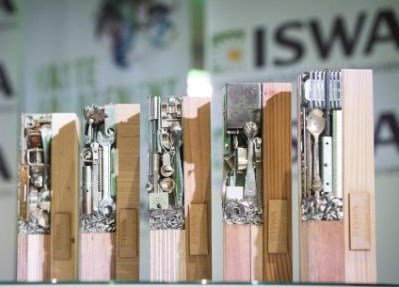
The 2015 ISWA Awards before the presentation ceremony. They were designed and made by the upcycling sculptor Evy Puelinckx from found materials.

Professor David C Wilson and his co-authors have won three prestigious publication awards. Their paper ‘Wasteaware’ benchmark indicators to measure the performance of a city’s SWM system won two awards for the best paper published in 2014-15: the 2015 ISWA Publication Award and CIWM’s 2014-15 James Jackson Medal. The earlier 2012 paper in the same series, Comparative Analysis of Solid Waste Management in 20 Cities, won the inaugural WM&R Best Paper Award 2014, for the most cited paper published in the previous two years in the ISWA peer-reviewed journal Waste Management & Research.

The ISWA Publication Award citation noted that the ‘Wasteaware’ paper ‘… contributes to one of the major issues in … solid waste management (SWM) in developed and developing countries … has the potential to assist many countries in the world (in) developing sustainable and integrated SWM strategies.’ The two ISWA awards were presented at the ISWA 2015 World Congress in Antwerp on Tuesday 08 September, when DCW received two trophies designed and made by the upcycling sculptor Evy Puelinckx. The James Jackson Medal will be presented at the annual CIWM Sustainability and resource Awards at the London Marriott on 5 November 2015.

Professor David C Wilson, Ljiljana Rodic, Costas Velis and Anne Scheinberg are co-authors of both papers. The remaining co-authors of the Wasteaware indicators paper are Mike Cowing, Andy Whiteman, Recaredo Vilches, Darragh Masterson, Barbara Oelz and Joachim Stretz; and of the 20 Cities paper, Graham Alabaster.

UNEP launch their Global Waste Management Outlook

Professor David C Wilson, the editor-in-chief, presented UNEP’s Global Waste Management Outlook (GWMO) at its launch at the ISWA World Congress in Antwerp on Monday 7th September. The GWMO provides the first comprehensive global overview of the state of waste management around the world in the 21st century. It sets out a series of five Global Waste Management Goals and a call for action addressed to individuals, businesses, governments and the international community. There are three main GWMO Outputs, with the main report of around 300 pages being accompanied by an 8-page infographic Summary for Decision Makers and a 2-page flyer for a general audience. The main report can be downloaded here, and the summaries (plus the latest Regional Waste Managment Outlooks) here.

Waste management is a key utility service and a critical element of the infrastructure that underpins Society – it is often rated in the top three priorities faced by developing country cities – but, tends also to be ‘taken for granted’ and does not often appear towards the top of national or international political agendas. This was recognised at the Rio+20 Sustainable Development Summit in 2012, following which the UNEP Governing Council requested UNEP: ‘to develop a global outlook of challenges, trends and policies in relation to waste prevention, minimization and management … to provide guidance for national policy planning’.

Waste management is a cross-cutting issue impacting on many aspects of society and the economy. It has strong linkages to a range of other global challenges such as health, climate change, poverty reduction, food and resource security and sustainable production and consumption. The five Global Waste Management Goals set out in the GWMO are all to be found within the 2030 Agenda for Sustainable Development (agreed by the world’s leaders in New York just a couple of weeks after the launch of the GWMO), but making progress toward them would contribute to achieving 11 out of 17 SDGs.

The GWMO estimates that around 2 billion people worldwide lack access to a basic waste collection service, while around 3 billion lack access to controlled disposal services for municipal solid wastes. So the first two Global Waste Management Goals are to ensure by 2020 access for all, to adequate, safe and affordable solid waste collection services; and (2) to stop uncontrolled dumping and open burning. Goal 3 takes this one step further, by 2030 to achieve sustainable and environmentally sound management of all wastes, particularly hazardous wastes. As part of the Global Call for Action, the GWMO is calling on the international community to mobilise international aid, and environmental and climate funds, to assist the poorest countries to provide basic waste services to all in urban areas. Specifically, to increase the proportion of funding directed to waste management by a factor of 10, from the 0.3% achieved over the last decade.

The remaining Global Waste Management Goals focus: (4) on ensuring by 2030 a substantial reduction in waste generation through prevention and the 3Rs (reduce, reuse, recycle), thereby creating green jobs; and more specifically, (5) cutting by a half per capita global food waste at the retail and consumer levels and reducing food losses in the supply chain.

The technologies required to ‘solve’ the waste problem are largely already available, and have been much written about. The GWMO has chosen rather to focus primarily on the less fashionable ‘governance’ issues which need to addressed to establish a sustainable solution –including the regulatory and other policy instruments, the partnerships and, crucially, the financing arrangements– and to provide a ‘toolkit’ to be used in developing a solution appropriate to the local situation.

The GWMO has been prepared by an international team for UNEP’s International Environmental Technology Centre (IETC) and ISWA. It is the result of two year’s work, including broad international peer review of three main drafts. The team was headed up by DCW as editor-in chief and lead author. The lead author of the data review chapter was Dr Prasad Modak, EMC India; waste governance, Dr Ljiljana Rodic, Wageningen University; and waste financing, Reka Soos, RWA Romania. Other co-authors were Ainhoa Carpintero, IETC (project manager); Dr Costas Velis, University of Leeds (Academic advisor); Professor Mona Iyer, CEPT University, India (Case study editor) ; and Otto Simonett, Zoi Environment (Communications advisor).

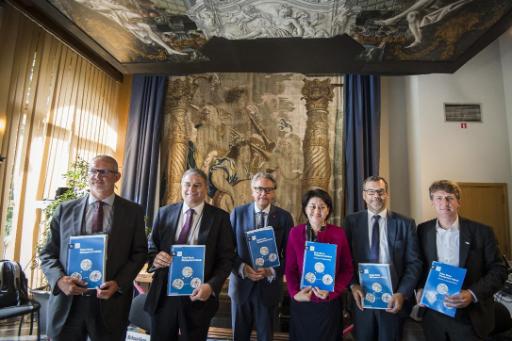
Official launch of the GWMO

Official launch of the GWMO

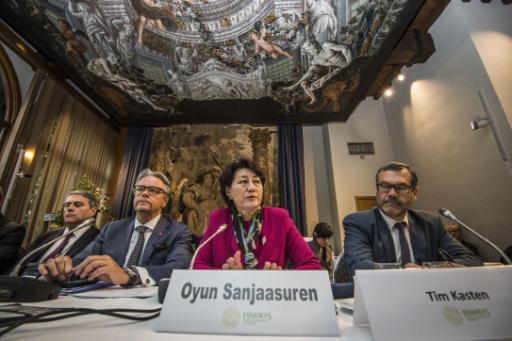
Madam Oyun launching the GWMO

Madam Oyun launching the GWMO

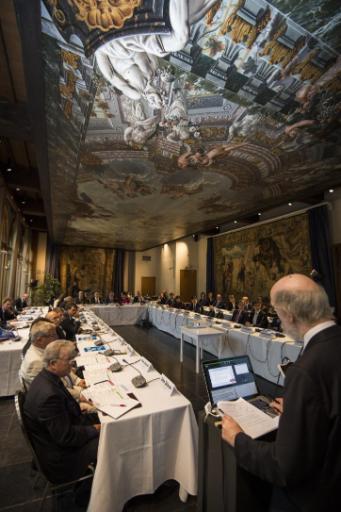
DCW presenting the GWMO at the Ministerial launch

DCW presenting the GWMO at the Ministerial launch

DCW launching the GWMO

DCW launching the GWMO

ISWA reports on Globalisation and Waste Management

The ISWA Task Force on Globalisation published its final report today, to coincide with the opening of the ISWA 2014 World Congress in Sao Paolo, Brazil. Two supporting reports have also been published, on Global Recycling Markets: Plastic Waste and A Review of International Development Co-operation in Solid Waste Management. Prof David C Wilson was the scientific co-ordinator for the Task Force and a co-author of the reports.

The Task Force’s interim report, in 2012, highlighted the links between globalised supply chains, consumerism, population growth, urbanisation, resource depletion and waste management. It underlined the crisis humanity faces in needing to stop open waste dumping and to bring collection services to half the world’s population that don’t have them. Dumping and incomplete collection damage our health and environment. It called for a collective global effort, such as in the fight against diseases (malaria, AIDS), in order to stop hundreds of millions of tonnes of waste polluting our water, soil and air. This requires co-operation between a wide range of stakeholders and above all funding.

The Task Force’s Final Report addresses a series of issues in a concise and accessible manner. The report addresses the challenges of managing wastes in rapidly growing megacities. It also searches for answers to the growing challenge of informal sector workers, particularly in developing nations, and how to protect them through a transition to more formal structures, a highly contentious issue among waste professionals. A previous update and seminal open access paper has also addressed this issue.

The other two issues have also been elaborated in the two major reports published alongside the Final Report. One addresses recycling of plastics and how the global supply chain is affected by recycling practices in developed nations that rely on export markets, particularly China, to ensure their sustainability. The other examines the role of international co-operation in the development of waste management in economically poorer nations and finds that the amount of international co-operation going to protect people’s health and their environment from uncontrolled waste is almost nothing, a miserable record for the International co-operation community and one which must be changed in the near term.

DCW to edit the first Global Waste Management Outlook

Following the Rio+20 Earth Summit, the United Nations Environment Programme (UNEP) was mandated to prepare an authoritative global outlook of challenges, trends and policies on waste and resource management.UNEP’s International Environment and Technology Centre (IETC) and the International Solid Waste Association (ISWA) have this week announcedthat work has now started on the first Global Waste Management Outlook, aiming for a 2015 publication. Professor David C Wilson has been appointed as Editor in Chief.

The UNEP mandate to prepare the Global Waste Management Outlook (GWMO) originated from the outcome of the Rio+20 United Nations Conference on Sustainable Development in 2012. Preparation is being led by the IETC in Osaka, japan, in asociation with ISWA. A first stakeholder consultation meeting was held 8-9 July at the UNESCO Headquarters, Paris.

The Editorial Team includes DCW as Editor in Chief; Costas Velis as Advisor and Contributor; Lead authors Ljiljana Rodic, Prasad Modak, and Otto Simonett; and Mona Iyer as Case Study Editor. Mini CVs for each core team member are on the IETC website.

Wide consultation with a broad group of stakeholders including decision makers, the world’s leading institutions and experts in waste management will be central to the development of the GWMO. The first consultations in the format of e-regional consultations on the first draft annotated chapter outlines were launched today, 20 December 2013, and close on 27 January 2014.

The final document is aimed to be concluded within the first quarter of 2015 and is proposed to be a valuable tool for decision makers, decision formers and professionals, offering a validated comparative analysis on the state of waste management around the globe, based on standardised policy indicators and benchmarks.

UNEP IETC and ISWA are seeking further contributors to the project particularly sponsors to help support future in person consultations. If you are interested in contributing to the GWMO then please contact the GWMO Project Manager at [email protected], cc[email protected]