30 June, 2018 | Publication, Waste Management
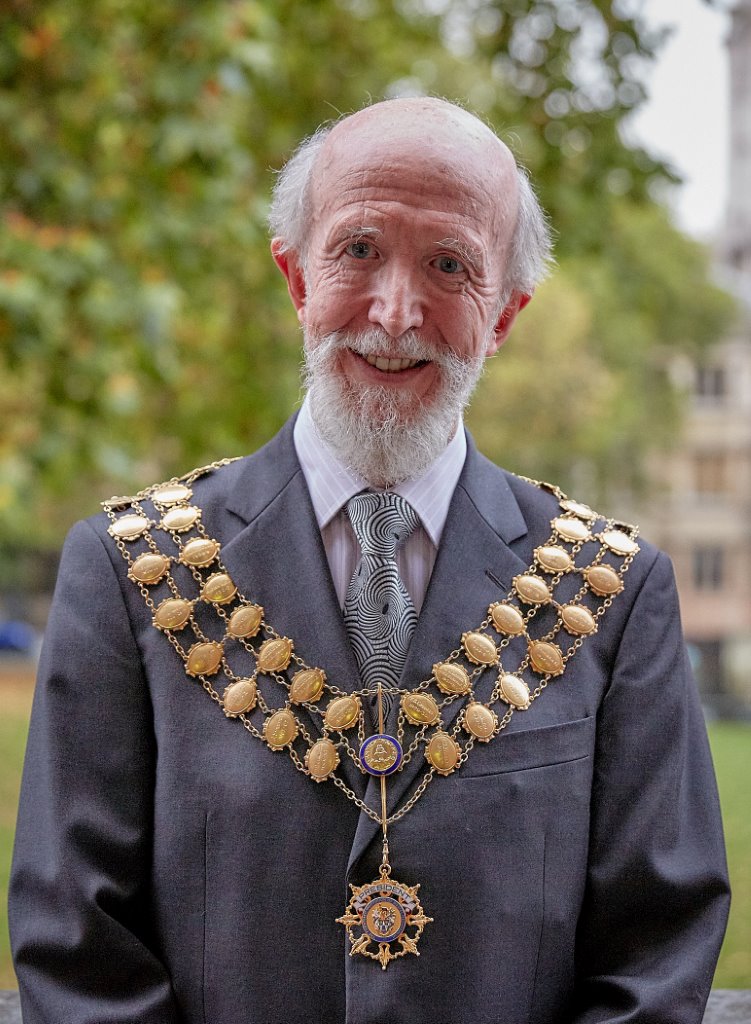
DCW’s Presidential year at CIWM continues to be dominated by marine plastics. As part of our efforts to influence developing UK policy in this area, CIWM and Wasteaid published a report: ‘FROM THE LAND TO THE SEA: How better solid waste management can improve the lives of the world’s poorest and halve the quantity of plastic entering the oceans’. His June CIWM column reports success: the day before the biennial Commonwealth Heads of Government Meeting in London in April, Theresa May announced a new Commonwealth Clean Oceans Alliance (CCOA) backed by a £61.4 million funding package of funding to help tackle marine plastics, of which more than £20 million would help developing country members of the CCOA improve waste management at a national and city level.
31 May, 2018 | Publication, Resource and waste management
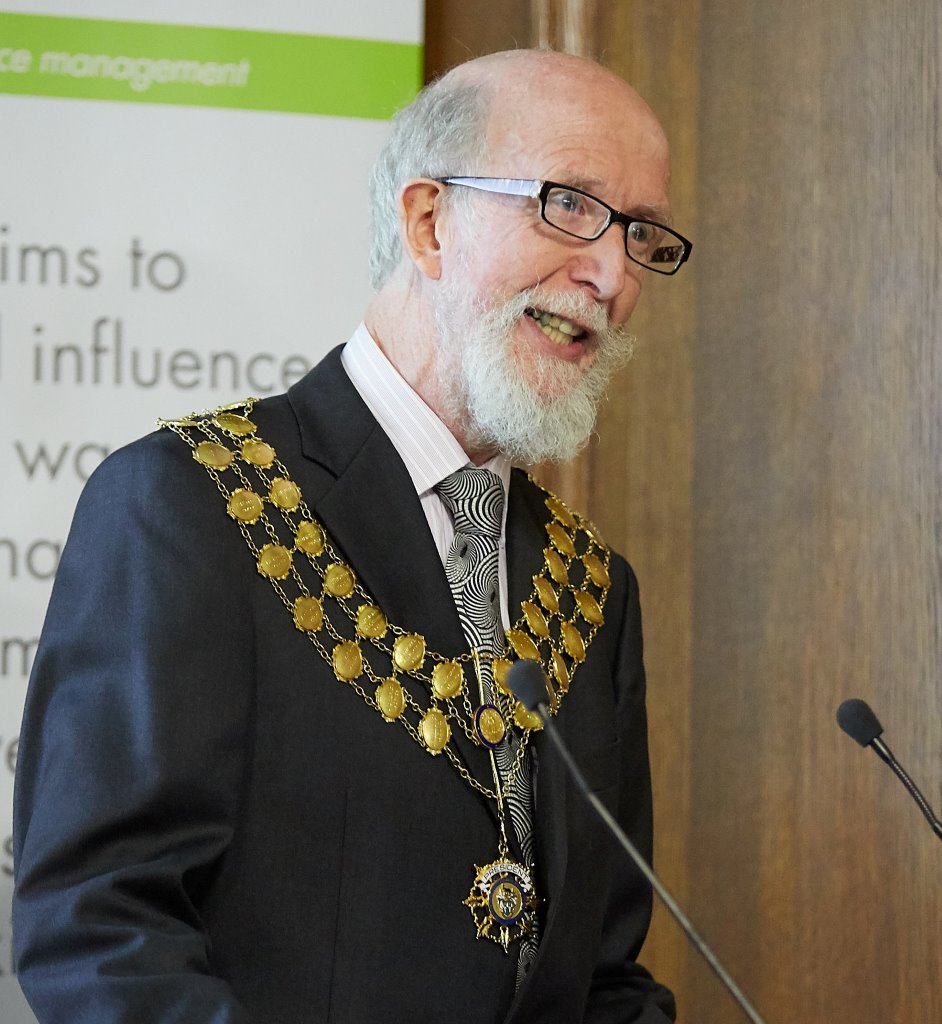
Europe and North America have a problem with sustainable recycling. China’s ban on imports has thrown the problem into sharp focus: where are the markets for the materials we are collecting for recycling to meet the targets? And how do local authorities balance their already curtailed budgets as prices for recycled materials plummet? DCW’s May CIWM column explores the history of recycling over the last 40 years, and concludes that our existing policy support measures, focusing on increasing supply rather than demand, are not fit for purpose. He argues that we need to rethink recycling to make it a sustainable foundation for our future circular economy; and makes the case for considering explicitly the embodied social, environmental and technical values alongside the market price.
DCW has for the last three years chaired the Steering Committee for an interdisciplinary research project at the University of Leeds, funded jointly by the Natural Environment and Economic and Social Research Councils, to develop a new analytical framework which considers all four of these dimensions of value. The new CVORR (Complex Value Optimisation for Resource Recovery) tool should facilitate future work in this area.
What sort of solutions are suggested by applying complex value thinking? Current approaches focus on increasing the technical value of the recycled materials, for example through separation at source of individual streams rather than co-mingled materials. They also place the risk of fluctuating prices squarely on local authorities and their contractors; and they in turn plead for Government support for new recycling capacity within the UK. But even with support, such facilities need to compete in a global market, and many UK reprocessing companies have failed over the last decade. The obvious place to look for answers is the companies who place on the market the products which become waste, particularly single trip packaging. The complex value framework would suggest that a fundamental rethink of existing systems for EPR (extended producer responsibility) is required. Producers need to meet all costs for collection, sorting and recycling of their products when they become wastes; and to ensure that markets exist for the recycled materials, for example by taking an ownership stake in the reprocessing facilities and using a minimum % of those recycled materials in their products.
13 May, 2018 | Publication, Waste Management
To qualify for inclusion in the official (IPCC) inventory of greenhouse gases (GHGs), data for an emission source must meet a quality threshold. This currently excludes black carbon emissions from the open burning of wastes. The relative quantities may be small compared to carbon dioxide from fossil fuels or methane from landfill, but black carbon is around 2,000 more powerful than CO₂ as a GHG and has an even shorter half-life than methane. In the absence of real data, early modelling studies using broad assumptions suggested that black carbon from open burning contributes 5% of total global GHG emissions, causing 270,000 premature deaths a year. DCW’s PhD student at Imperial College London, Natalia Reyna, has been working for the last four years to provide real data which would meet the IPCC requirements. Our first paper, published this month in the leading journal Environmental Research, presents field data from Mexico on how much solid wastes are disposed of by open burning, either by households or at uncontrolled dumpsites. The results suggest a GHG contribution from uncontrolled burning in backyards in Mexico fifteen times larger compared to methane released from the decomposition of equivalent amounts of waste in a disposal site. This suggests that urgent action is needed to reduce domestic open burning of waste and that this would have a significant impact, both on improving local air quality and respiratory health, and on reducing climate change. A future paper will present data on emission factors, i.e. how much black carbon is produced by burning a kilogram of waste.
29 December, 2017 | Publication, Waste Management
In his first monthly column in the CIWM Journal as CIWM President, Professor David C. Wilson has revisited his Presidential address. His overall theme for the year is solid waste management as a key utility service, underpinning modern society. Within that three strands are to avoid complacency when it comes to protecting public health and the environment; the continuing move from the linear ‘make – use – dispose’ model to a more circular economy; and the global waste crisis, with more than 3 billion people lacking access to a basic solid waste management service.
https://corazoninc.com/propecia/
DCW writes: ‘“Let us work together to promote the fact that solid waste management is one of the essential utility services underpinning our society. Let us ensure that the regular, daily delivery of that service to protect public health and the environment is not undermined, either by on-going cuts in local authority spending or by deregulation following Brexit”. And again: “It is simply unacceptable that 40% of the World’s population lack this basic utility service that we take for granted. We need to ensure that waste collection is extended to all people, and that uncontrolled dumping and open burning is eliminated.”
18 October, 2017 | Awards, Resource and waste management
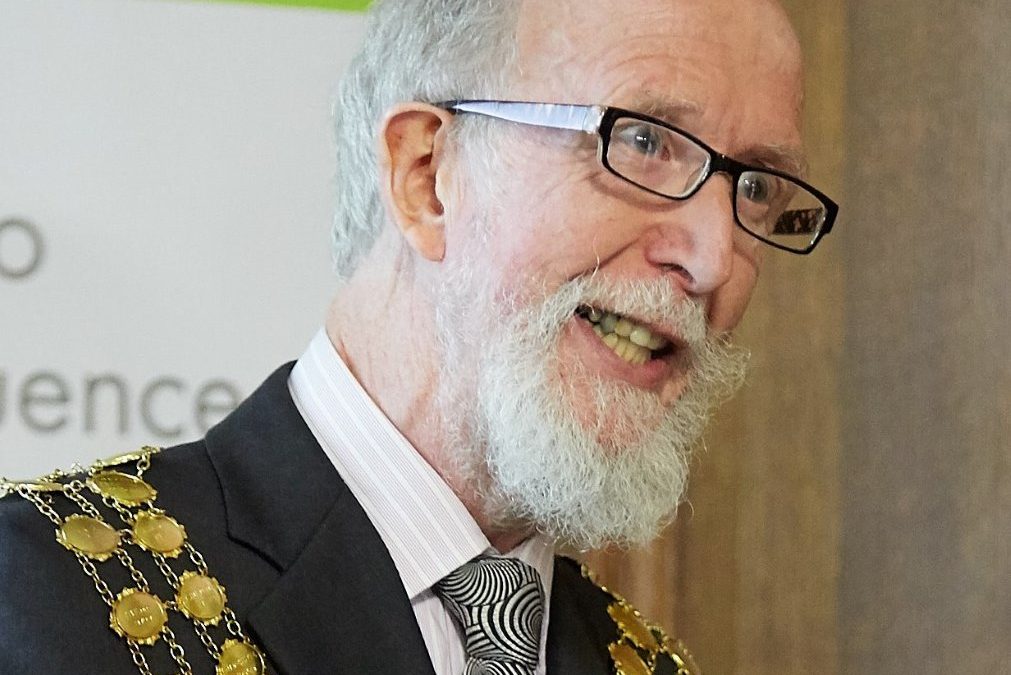
Professor David C Wilson following his inauguration in Westminster as 2017-18 CIWM President
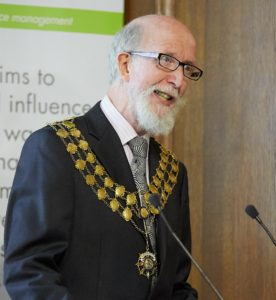
Professor David C Wilson giving his inauguration speech as CIWM President 2017-18
https://samtech.edu/accutane-treating/
Professor David C. Wilson has been inaugurated as the 102nd President of CIWM, the UK and Irish professional body for resources and waste, at a reception in London. He described solid waste management as one of the key utilities and said that as public sector budgets continue to come under pressure, “we must not lose sight of where we have come from, that the service exists first and foremost to protect public health”. He highlighted the ‘global waste management emergency’, where 40% of the World’s population lacks this basic utility service. He also launched his Presidential report, Making Waste Work: A Toolkit, prepared by WasteAid UK and aimed at helping unserved communities in the least developed countries to help themselves, by developing self-sustaining businesses making useful products for the local market from the resource value in their waste.
Outlining the importance of legislation in the substantial progress that has been made in the sustainable and safe management of waste since the early 1970s, Professor Wilson added that there can be no softening of the regulatory framework. “Two major priorities for CIWM in the UK are to ensure that following Brexit we have continuity of the strong regulations on which the very existence of the waste and resources industry depends, and the continuing fight against waste crime.”
While continuity is important on one hand, DCW went on to talk about the step change in approach to resources and waste that is happening, and he called for a “necessary parallel focus on the 3Rs – reduce, reuse, recycle – and on the shift from the linear model to a circular economy where resource efficiency and productivity is key”. An integrated and inclusive approach will be needed, he said, as well as a balanced set of policy drivers.
Professor Wilson highlighted that, despite the progress that has been made, more than 2 billion people have no waste collection at all and the waste of over 3 billion people is either dumped or subject to uncontrolled burning. This matters: for example, children growing up in households without waste collection have double the rate of diarrhoea and six times the rate of acute respiratory infection; and open burning of waste could double the current, official IPCC estimates of the contribution of methane emissions form landfill of waste to global warming. However, he also sees this ‘global waste management emergency’ as an opportunity for the international community. “If we can increase the proportion of existing international development finance being directed at SWM from the current, fairly derisory, 0.3% to just 3% up to 2030, as recommended in the GWMO, then not only can we extend waste collection to all and eliminate open dumping and burning of waste, but due to the cross-cutting nature of waste management, we can also make progress against no fewer than 12 out of the 17 UN Sustainable Development Goals agreed by world leaders to achieve a sustainable future for our planet.”
Press coverage:
Resource: Community waste schemes, the global waste crisis, domestic issues, DCW’s life in waste.
Waste Management World: Waste as a utility, domestic issues, the global waste emergency.
Letsrecycle.com: Global waste emergency, community waste toolkit
Recycling Waste World: Community waste toolkit
CIWM-journal: Waste as a utility, domestic issues, the global waste emergency, community waste toolkit
Interview with DCW in CIWM Journal: